
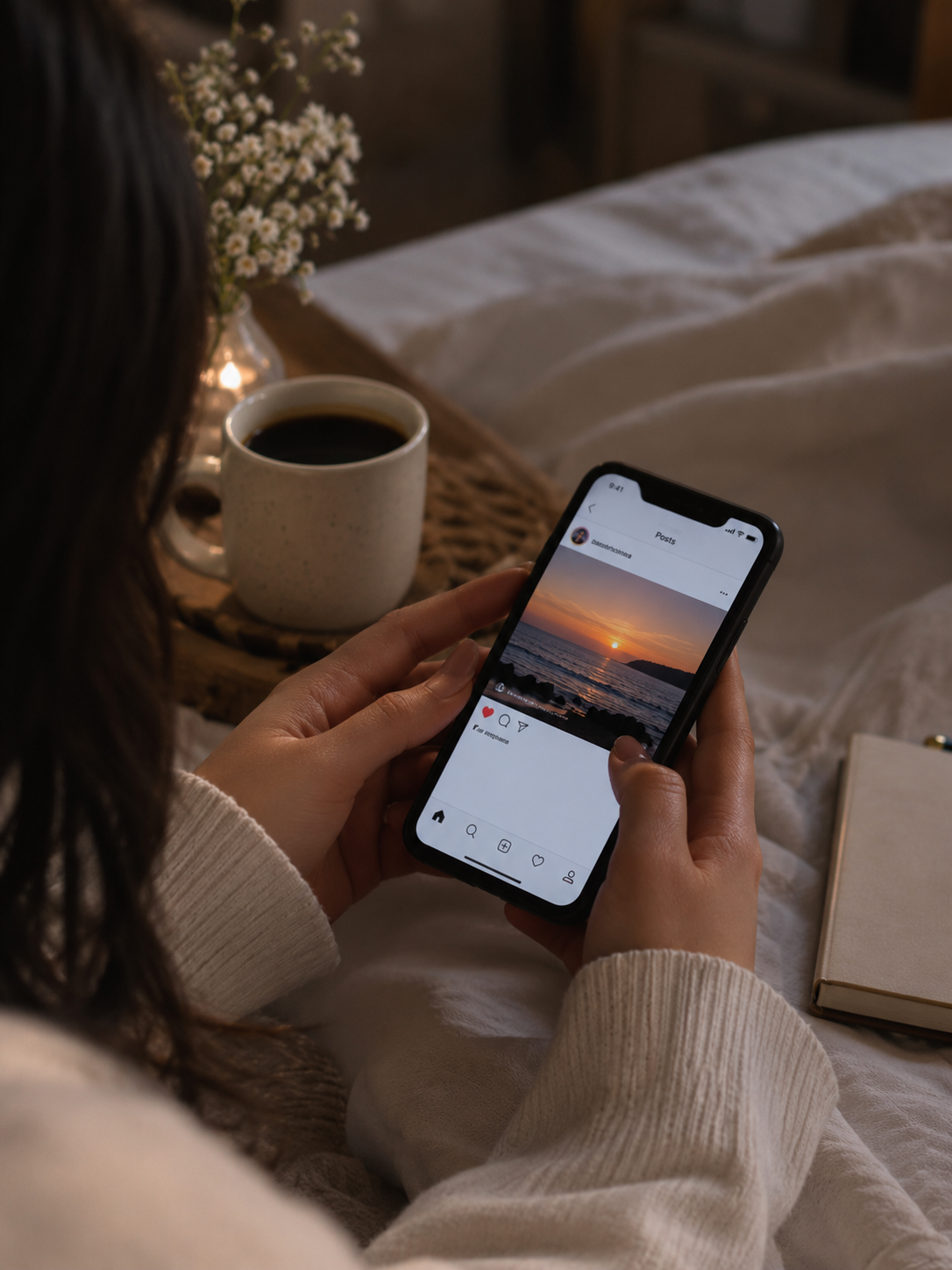
To some people, liking a partner’s social media post is such a small thing that it hardly deserves a discussion.
It’s just Instagram, after all.
A like isn’t proof of love, but if it means so little, why can it mean so much to your partner?
Some couples rarely post about each other or pay much attention to likes, and they’re perfectly happy that way. The issue is not that every couple needs to express affection online, but what happens when two people have different expectations.
What if your partner has explained more than once that a simple like helps them feel supported and appreciated, yet you continue to treat that need as though it means nothing?
The question becomes even more confusing when you’ve shown that you were capable of giving your ex that kind of attention, as well as other women.
Why was it so easy for you to do it before, yet so difficult to do for your current partner, even when you keep telling her how much you love her?
Perhaps it’s time to look beyond the like itself and start paying attention to the meaning behind it.
It’s a Small Gesture, but It Can Mean Something
We all have different ways of expressing and receiving affection. Some people show love through physical touch, others through words, quality time, acts of service, or thoughtful actions.
For some couples, engaging with a partner’s social media post is another way of showing affection.
When your partner shares a photo they’re happy with, celebrates an achievement, or posts a little piece of their life, you don’t have to leave an elaborate comment or publicly declare your love. Sometimes, a simple like is enough to say, “I saw this. I’m happy for you.”
Of course, a like doesn’t automatically mean someone cares, just as the absence of one doesn’t automatically mean they don’t. We all get busy, miss posts, and use social media differently.
The concern arises when it keeps happening, especially after one person has explained why it matters to them.
At that point, the conversation is no longer just about a social media interaction. It’s about how much effort both people are willing to make with the things that matter to each other.
You may not personally care if your partner likes your photo. Still, if you know that this small act makes them happy, have you taken the time to understand why it matters to them?
You don’t have to share the same preference to recognise its importance to someone you love. A healthy relationship doesn’t require us to agree on everything, but it does require us to take each other’s feelings seriously.
Why Did Other Women Get That Attention, but Your Partner Doesn’t?
This is where things get more complicated.
Imagine you’ve always been someone who actively likes other women’s photos on social media. Maybe you did this when you were single, or you were quite expressive with your ex. You liked her photos, commented on her posts, showed her off, and openly interacted with her online.
Now you’re in a new relationship. You tell your current partner that you love her, yet you rarely like her photos, comment on her posts, or show much interest in what she shares online. You don’t share photos of the two of you on your social media either.
When she brings it up, you tell her that social media doesn’t matter, that she’s overthinking, or that she shouldn’t need these things to feel secure. You might even point out that you’ve taken most of her photos yourself, as though that should be enough to make her feel appreciated.
From her perspective, it’s hard not to wonder: “If you were willing to do these things before, why is it suddenly so difficult to do the same for me?”
It’s a fair question.
Nobody is obligated to repeat every behaviour from a previous relationship. People change, circumstances differ, and you may have your own reasons for keeping your current relationship more private. Your past behaviour doesn’t mean you have to act the same way forever.
There is a difference between choosing a different approach to relationships and making your current partner feel as though she has to earn the thoughtfulness you once showed someone else.
If you’ve shown that you’re comfortable expressing affection publicly, it’s reasonable for your current partner to wonder why that same attention now feels difficult to give. That difference doesn’t automatically mean you love her less, but it deserves an honest explanation rather than a dismissive response.
Understanding Each Other’s Reasons and Meeting Halfway
There may be reasons for the difference that have nothing to do with your partner’s worth.
Perhaps you prefer to keep your current relationship private, feel uncomfortable sharing personal details online, or simply no longer use social media the way you did before.
Those reasons deserve to be heard, just as your partner’s feelings deserve consideration.
If you explain your preference honestly, she may be willing to respect your decision not to post photos of the two of you together. She may accept that you don’t want your relationship to become a public topic or that you prefer to keep certain parts of your life to yourself.
However, a compromise requires both people to have a say in what happens next.
She may be willing to keep your relationship private while still hoping you’ll like her photos, leave a comment occasionally, or show support for the things she shares. These are not necessarily the same request.
You can prefer to keep your relationship private while still acknowledging your partner on her own social media.
If she respects your preference not to share couple photos, it’s fair for you to consider the small ways she hopes to feel acknowledged and supported. That doesn’t mean you must agree to every request. It means being willing to discuss what would work for both of you instead of treating her preference as a problem to be dismissed.
Your current partner should not have to compete with your ex or wonder why another woman received a more expressive, attentive version of you. At the same time, your relationship is not a competition with the past, and your partner’s worth should never be measured against how you treated someone before her.
The goal isn’t to recreate a previous relationship or force you to behave in a particular way. It’s to take each other’s needs into account and find a middle ground that respects both of you.
A compromise should not mean that one person keeps adjusting while the other makes no effort to meet them halfway.
Privacy Is Valid, but So Is Wanting to Feel Acknowledged
Not everyone wants to share their relationship online, and that preference deserves respect.
Some people are comfortable with it, while others prefer to keep that part of their lives to themselves. Neither approach is wrong, and no one should have to post their partner or reveal personal details just to prove their commitment.
Privacy and acknowledgement, however, are not the same thing.
You can prefer not to post your partner while still supporting the things they share. You can show interest in their achievements, photos, hobbies, and everyday experiences without making your relationship the focus of your social media.
You can have boundaries around public displays of affection without making your partner feel that their presence in your life is something you would rather ignore.
There are also ways to acknowledge your relationship without revealing everything. You might share a photo of your hands together, post a picture from a date without showing your partner’s face, or occasionally share something that reflects the time you spend together. You don’t have to reveal your partner’s identity or every detail of your relationship to show that someone is part of your life.
Of course, these options won’t suit everyone.
Some people prefer not to share any aspect of their romantic lives online, and that boundary should be respected. What matters is discussing those boundaries honestly and finding an approach that works for both partners.
If you’re willing to respect your partner’s preference for privacy, it’s fair to hope that they’ll consider your need to feel acknowledged, too. Neither person should have to abandon their own comfort completely, but neither should expect their preferences to be the only ones that matter.
A private relationship can still be an affectionate one. Likewise, a partner who values this kind of acknowledgement should be able to express that preference without being ridiculed or labelled insecure.
Love Should Not Be a Reason to Dismiss Someone’s Feelings
Two people can genuinely love each other and still struggle to make each other feel loved.
One person may believe that saying “I love you” is enough reassurance. The other may need to experience that love through consistent actions. One may see a like as meaningless, while the other sees it as a way of feeling supported.
Neither person can expect the other to automatically share their perspective. Once those differences have been explained, what matters is how willing both people are to make room for each other’s needs.
If your partner tells you that something matters to them, you don’t have to agree that it is important in the same way they do. You do, however, need to consider whether it’s something you’re willing to do because you care about them.
Sometimes, the effort required is very small. In other situations, the request may conflict with a genuine boundary, and a different solution is needed. Either way, an honest conversation is far more useful than dismissing your partner as insecure or immature.
Wanting your partner to acknowledge your presence in their life doesn’t automatically mean you lack confidence or need constant validation. You may simply want to feel that the person you love is happy to have you in their life and willing to show that appreciation in small ways.
A like on social media may seem insignificant to one person, but it can carry a different meaning for someone else. Taking that feeling seriously is more helpful than assuming the request comes from insecurity.
If you’re the one making the request, it’s equally important to recognise that your partner may express love differently. You can communicate what you need, but you cannot dictate every action or demand that affection always look exactly as you imagine it.
The goal is not to control each other. It’s to know each other well enough to build a relationship in which both people feel considered.
Nobody Wants Affection That Feels Like an Obligation
When someone has repeatedly asked their partner for something, receiving it after a conversation can bring mixed feelings.
They may feel happy that their partner has finally listened, while still carrying some frustration from having to explain why it mattered in the first place.
Perhaps he has started paying more attention to her posts, liking her photos, or making an effort to show his support. Rather than questioning every action, it’s worth giving him room to show that he’s willing to meet her needs.
What matters is what happens from there. Did they listen to each other and find a way forward? Can they leave the disagreement behind while giving each other room to learn and adjust?
Nobody wants affection to feel like an obligation, and nobody should have to keep asking for the same thing indefinitely. At the same time, learning to express love in ways that matter to a partner can take time, especially when two people have different expectations.
If your partner listens and makes an effort, it’s okay to appreciate that while allowing time for new habits to develop. Consistency matters, but so does recognising genuine effort when it happens.
The goal isn’t to question every like or wonder if each action is sincere. It’s to reach a point where both people feel heard and showing affection becomes more natural.
So, Does Liking Your Partner’s Post Matter?
The honest answer depends on the couple.
For some people, it means very little. For others, it’s a small but meaningful way of showing support. Neither experience has to invalidate the other.
We should be careful about telling someone that something doesn’t matter simply because it doesn’t matter to us.
A like is not a measure of someone’s worth. It cannot tell us if a partner is faithful, loving, or committed. We should never have to rely on social media engagement to feel that we deserve affection, and we should never use it as the only measure of a relationship.
Still, small acts of consideration can shape how people experience love. When they are repeatedly withheld, particularly after a partner has explained their significance, the hurt may extend beyond social media itself. It can become a question of effort, care, and whether both people feel that their needs matter.
When there is a noticeable difference between how someone treated a previous partner and how they treat their current one, it’s understandable to ask why. That difference doesn’t prove that the current partner is less loved or less worthy, but it deserves an honest conversation.
Your current partner is not less deserving of affection because she came into your life later. She should not have to compete with your past or repeatedly ask for little signs of affection just to feel that you’re happy to have her.
At the same time, no one should have to perform affection in a way that goes against their genuine boundaries. A loving relationship is built on mutual respect and compromise, not forced gestures or constant monitoring.
Nobody should have to prove their love through Instagram, just as nobody should be made to feel foolish for wanting affection in a way that matters to them.
At the end of the day, the goal isn’t to collect likes or make a relationship look perfect to the outside world. It’s to feel appreciated by the person you’ve chosen, in public or in private, through grand expressions of love and everyday acts of care.
Love is not only about what we say we feel. It is also about how willing we are to pay attention to what makes the people we love feel cared for.
Sometimes, that kind of care begins with something as simple as a tap on a screen.
With love,
Auri Duham 🌻


