
I recently watched a travel-related video involving Malaysian tourists overseas that sparked criticism across social media. Regardless of what really happened, the entire situation made me stop and think about something much bigger.
Not about that group of people.
Not about that one country.
But about how we choose to behave whenever we travel abroad.
Over the years, I’ve been fortunate enough to travel solo to several countries, and that’s a privilege I’ll never take for granted. Each journey has given me the opportunity to visit places that millions of people call home and experience cultures that existed long before I arrived and will continue long after I’ve left.
To me, that privilege comes with responsibility.
This article isn’t about travel hacks or planning the perfect itinerary. It’s simply about good manners.
The kind that should probably be common sense, but somehow still deserves reminding… because the moment we board a plane, we also carry a responsibility. Not just to respect the places we visit, but to respect the people who call those places home.
✅ If You Have Nothing Nice to Say, Don’t Say Anything
One of the easiest ways to show respect while travelling is also one of the simplest.
Think before you speak.
Sometimes, the kindest thing you can say is nothing at all.
It doesn’t matter whether you’re whispering to your friends or saying it loudly enough for everyone around you to hear. If what you’re about to say would embarrass, insult, or hurt someone, it’s probably better left unsaid.
One mistake many travellers make is assuming that local people won’t understand their language. That’s a risky assumption. The world is far more connected than it used to be. Many people speak multiple languages, and even if they don’t, they can often tell from your tone, facial expressions, and body language that they’re being talked about.
But here’s the real question…
Even if they never understand a single word, does that suddenly make it okay?
I’ve never understood why some people travel to another country only to make fun of the people who live there.
Maybe it’s their appearance.
Their accent.
Their clothing.
Their food.
Or even their body odour.
None of those comments make you a better traveller. They only reveal that you’re judging another culture through your own standards.
Every country has its own climate, traditions, and way of life. Things that seem unfamiliar to us are completely normal to the people who live there.
If you genuinely want to share an observation or tell a story about your trip, save it for a private conversation with someone you trust after you’ve left. There’s a big difference between sharing an experience and humiliating someone who has done absolutely nothing to you.
✅ Not Everything Needs to Be Recorded
We live in a time where almost everything becomes content. What we eat. Where we stay. Every attraction we visit.
Some people even record complete strangers they’ve never spoken to before.
Somewhere along the way, it feels like we’ve forgotten that not everything deserves to be filmed.
Just because you can record someone doesn’t mean you should.
I’ve seen tourists point their cameras at local people who were simply going about their day. Sometimes it’s because they look “different.” Other times, it’s because they unknowingly did something the tourist found amusing.
Maybe they tripped over a step.
Maybe they fell asleep on public transport.
Maybe they spoke broken English.
Maybe they simply made an innocent mistake.
None of those moments give us the right to turn another human being into entertainment.
Before you press the record button, ask yourself:
Am I capturing a place… or am I exposing a person?
There’s a big difference.
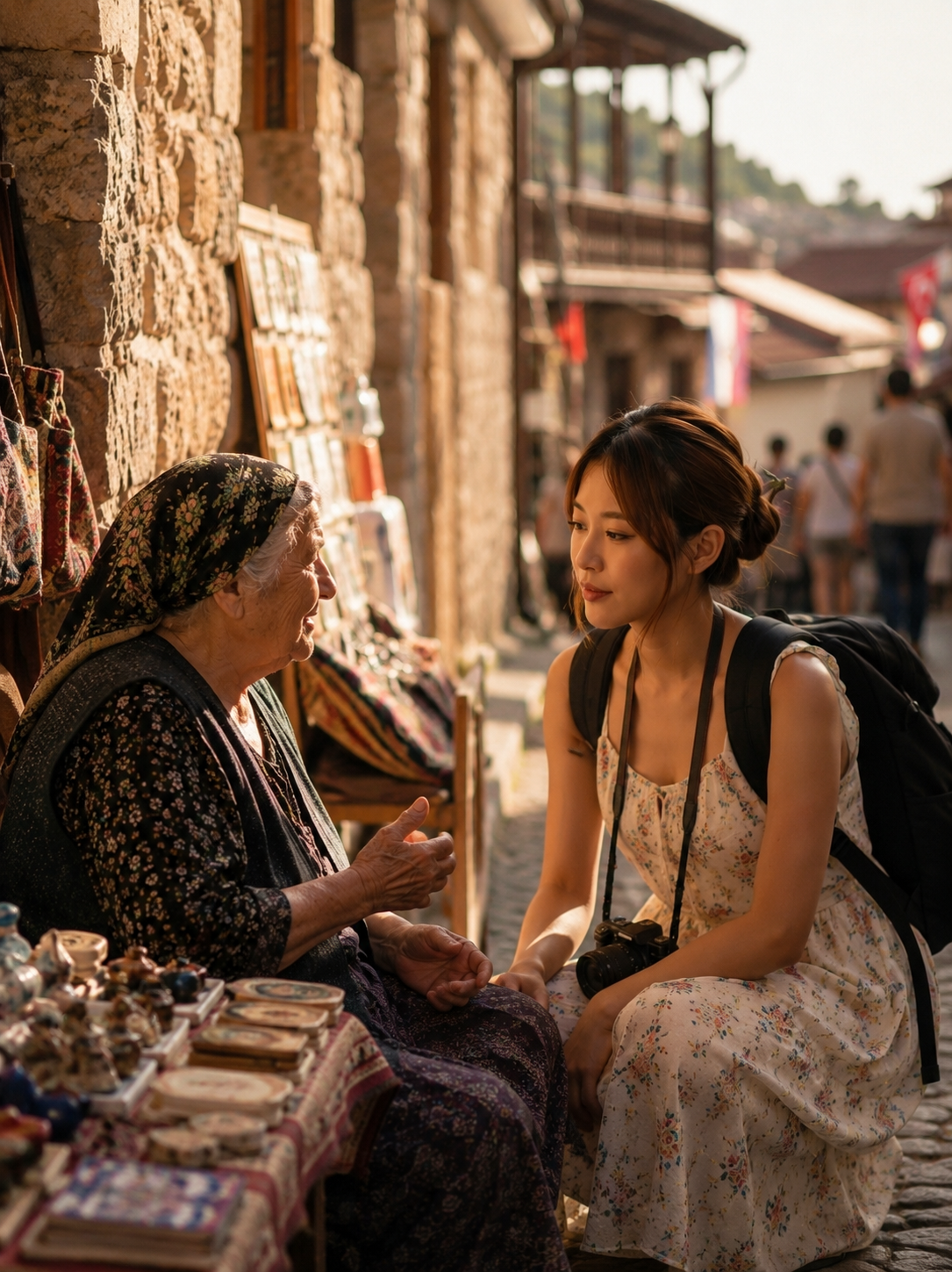
Travel should be about creating your own memories, not creating content at someone else’s expense. If you genuinely admire someone’s traditional outfit, craftsmanship, or something unique about their culture, ask for permission first. A smile and a simple,
“May I take your photo?”
can go a long way.
Many people will happily say yes. And if they say no… Smile, thank them anyway, and respect their answer.
✅ Learn About the Local Culture Before You Arrive
The first things I do before every trip isn’t packing my suitcase. It’s learning a little about the local culture.
You don’t need to become an expert or memorise an entire history book. Spending just a little time learning about local customs, social etiquette, and everyday habits can make a huge difference.
Every country has traditions that have been shaped over hundreds, sometimes even thousands, of years. What feels completely normal to us may be considered rude somewhere else. What seems unusual to us may simply be part of everyday life for the people who live there.
For example:
- In Japan, people generally keep quiet on public transport out of respect for those around them.
- In some countries, bargaining at local markets is expected, while in others, prices are fixed and negotiating can come across as disrespectful.
- Even tipping means different things depending on where you are. In some places it’s appreciated, while in others it may be unnecessary or even considered inappropriate.
Culture also influences how people greet one another, dress, eat, communicate, and behave at religious sites. These may seem like small details, but taking the time to understand them is one of the simplest ways to show respect.
Whenever I travel, I don’t expect another country to adapt to me. I’m the one who should make the effort to adapt.
No one expects you to get everything right. More often than not, people simply appreciate that you’re making the effort.
That’s the beauty of travelling. It isn’t finding another place that feels like home. It’s about appreciating the fact that it doesn’t, and allowing those differences to teach you something new.
✅ Every Country Has Different Rules. Learn Them Too.
Learning about the local culture helps you avoid being disrespectful.
Learning about the local laws helps you avoid getting into serious trouble.
They’re not the same thing.
That’s why I always treat legal research as a separate part of planning my trip. Before I travel, I usually check things like:
- Medication requirements
- Drone regulations
- Photography restrictions
- Public behaviour
- Rules at religious and historical sites
It only takes a few minutes, but it can save you a lot of unnecessary stress later.
The goal isn’t to memorise every law in the country. It’s simply to understand the rules that might affect your trip, your belongings, and the activities you plan to do.
Whenever possible, make official government and tourism websites your first source of information, especially when it comes to immigration requirements, restricted items, local laws, and penalties.
Travel blogs and videos can be incredibly helpful for personal experiences, but they should never replace official information. Spend a little time researching before you leave so you don’t find yourself saying,
“I didn’t know.”
Unfortunately, not knowing the rules doesn’t always protect you from the consequences.
A little preparation can save you from embarrassment, unexpected fines, having your belongings confiscated, or facing a situation far more serious than you expected.
✅ Be Kind, But Stay Aware
One of my favourite parts of travelling has always been meeting local people. Some of the kindest moments I’ve experienced abroad didn’t happen at famous landmarks or tourist attractions. They happened in the little moments.
A café owner recommending their favourite local dish.
A shopkeeper patiently showing me how to use the local currency.
A passerby going out of their way to point me in the right direction when I was completely lost.
Those moments reminded me that kindness exists everywhere… And sometimes, all it takes to receive kindness is to offer it first.
A smile.
A genuine “thank you.”
A little patience when there’s a language barrier.
Even learning a few simple words like hello, please, and thank you in the local language can make a difference. Your pronunciation doesn’t have to be perfect. Most people simply appreciate that you made the effort.
But kindness and awareness should always go hand in hand.
Just as there are kind people everywhere, there are also people who may try to take advantage of tourists.
So while I always try to approach people with kindness, I also remind myself to stay aware of my surroundings and trust my instincts.
If someone makes you feel uncomfortable, it’s perfectly okay to walk away or politely say,
“No, thank you.”
Being respectful doesn’t mean saying yes to everything. It simply means treating people with courtesy while also looking after your own safety.
The two can exist together.
One doesn’t cancel out the other.
✅ Remember That You’re Representing More Than Yourself
Every time we travel, we represent more than just ourselves. To the people we meet, we’re not simply individuals.
We’re visitors.
We’re tourists.
And quite often, we’re also seen as representatives of our country, “the Malaysians.”
Whether we realise it or not, the way we behave shapes how local people remember the travellers who come after us. One rude encounter can leave a lasting impression.
So can one act of kindness.
- A simple smile.
- A polite conversation.
- Showing patience instead of frustration.
- Respecting local customs without complaining.
These small moments may seem insignificant to us, but they often become the stories people remember.
I still remember the kindness shown to me by complete strangers during my travels. People who didn’t know me, didn’t speak my language, and had no obligation to help me, yet they did anyway.
It reminds me that I want to leave the same impression wherever I go. I want people to remember Malaysians as respectful, friendly, and considerate visitors. Not because I expect praise, but because every traveller who comes after me deserves to receive the same warmth and kindness that I was fortunate enough to experience.
The reputation we leave behind doesn’t end with us. It quietly shapes the experiences of future travellers too.
✅ Travel With Humility
Respect starts with our actions. Humility starts with our mindset.
One of the biggest lessons travelling has taught me is this: The world doesn’t exist to meet my expectations.
I’ve heard travellers complain because another country doesn’t do things the way Malaysia does.
“The food isn’t spicy enough.”
“The public transport is confusing.”
“They’re so quiet.”
“They’re so direct.”
“They don’t smile much.”
But why should they? We’re the ones visiting their country. Not the other way around.
Every destination has its own rhythm, traditions, and way of life. That’s not something to criticise.
It’s something to experience.
If every country looked, lived, and thought the same way, the world would be a much less interesting place. So instead of asking,
“Why do they do things this way?”
Try asking,
“What can I learn from this?”
That small shift in mindset can completely change the way you experience a destination.
✅ Leave Every Place With Respect
Every destination has something worth protecting. It could be a beautiful beach, a quiet hiking trail, a centuries-old temple, or a historical monument that has stood for generations.
As visitors, we have a responsibility to leave those places exactly as we found them, if not better.
That means:
- Not littering simply because you can’t find a rubbish bin.
- Not carving your name onto walls or historical landmarks.
- Not picking flowers just for a photo.
- Not climbing over barriers because you want a better view.
- Not feeding wild animals because it makes for a cute video.
These may seem like small actions, but when they’re repeated by thousands or even millions of tourists every year, the damage quickly adds up.
One thing I always remind myself is this:
Just because I paid to visit a place doesn’t mean I own it.
I’m simply borrowing it for a little while.
Future travellers deserve to experience the same beauty we do. And we’re only able to enjoy it today because countless people before us chose to protect it.
Leave your footprints. Not your rubbish. Not your graffiti. Not your damage.
✅ Final Thoughts
The more I travel, the more I realise that being well travelled and being a good traveller aren’t always the same thing.
I’ve met people who’ve travelled to dozens of countries yet still looked down on the cultures they visited. I’ve also met first-time travellers who treated every place and every person with genuine kindness, curiosity, and respect.
The difference wasn’t experience. It was attitude.
For me, travelling has never been about collecting passport stamps or ticking countries off a bucket list. It’s about coming home with a little more understanding than I had before I left, keeping an open mind, and embracing the things I didn’t know before.
We’re the guests.
Guests don’t get to decide how someone else’s home should be run.
The least we can do is leave with the same kindness and respect we’d hope visitors would show if they came to ours.
Because long after we’ve gone, someone else will arrive carrying the same passport, speaking the same language, and hoping to be welcomed just as warmly.
The way we travel today quietly shapes the experience they’ll have tomorrow.
Because the world doesn’t need more tourists.
It needs more respectful travellers.
Auri Duham 🌻


