
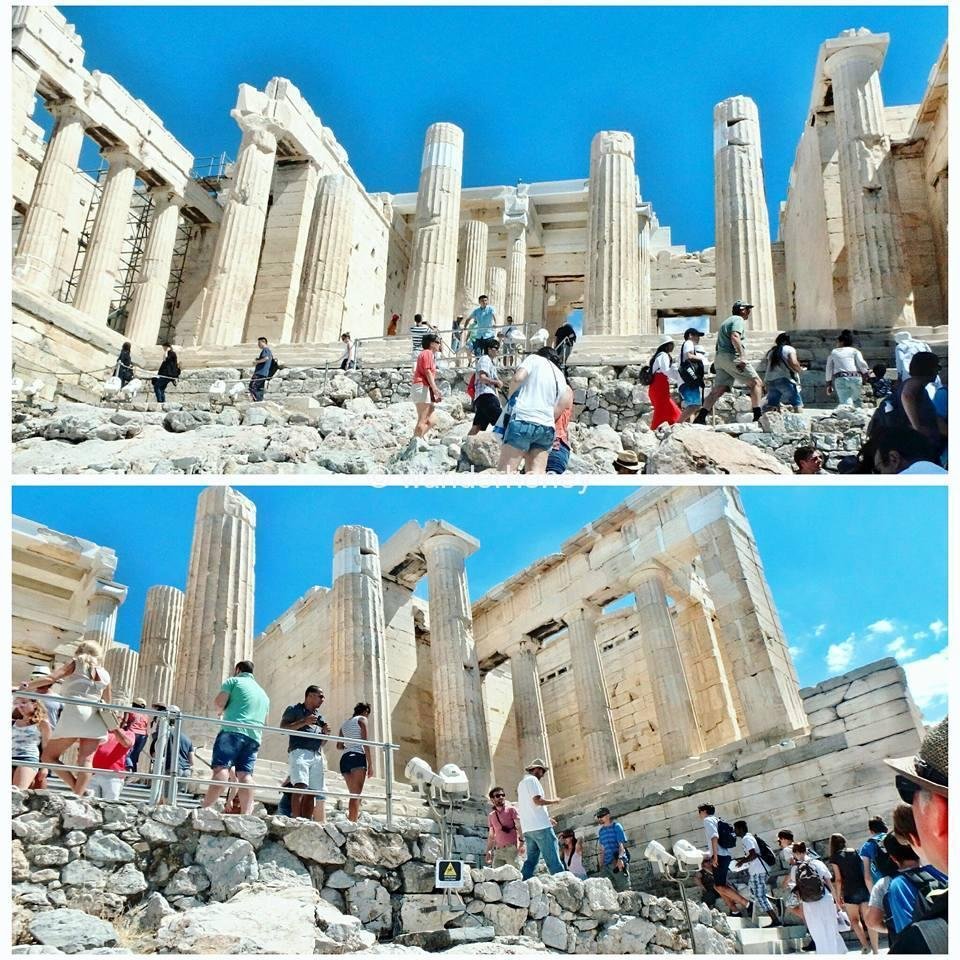
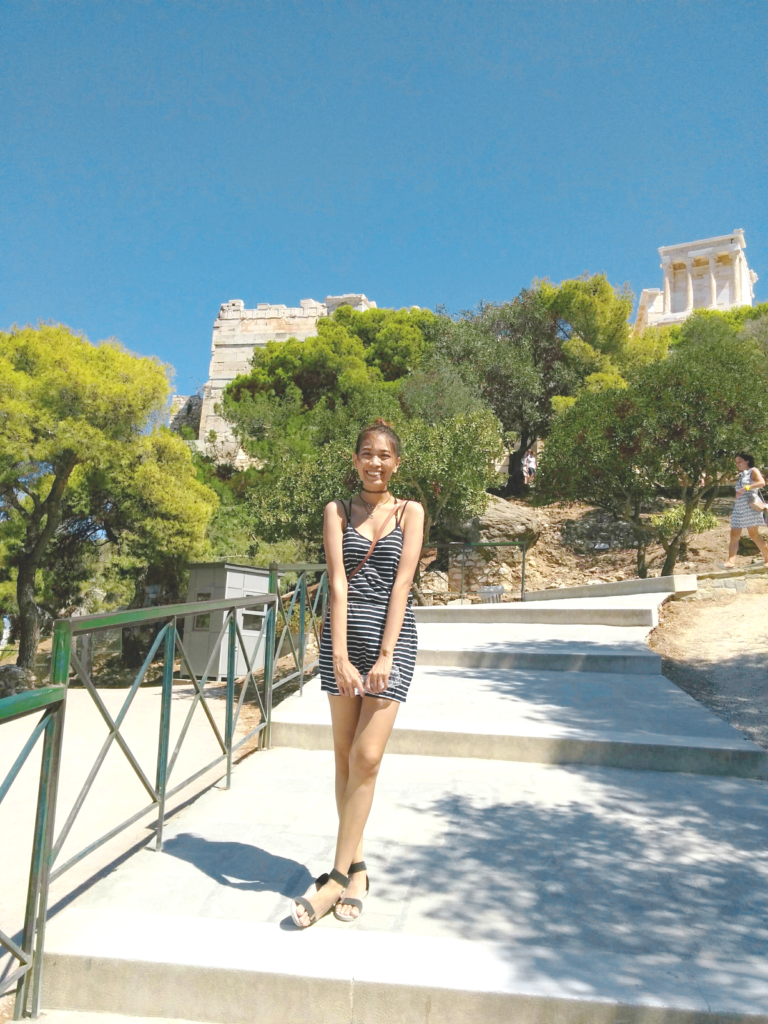
There are some trips you remember because of the places you visited. Then there are trips you remember because they changed the way you see the world. For me, Greece was both. When I booked my ticket to Greece back in 2016, I wasn’t just planning another holiday. I was preparing for my very first solo trip to Europe.
Excited? Absolutely.
Terrified? Also yes.
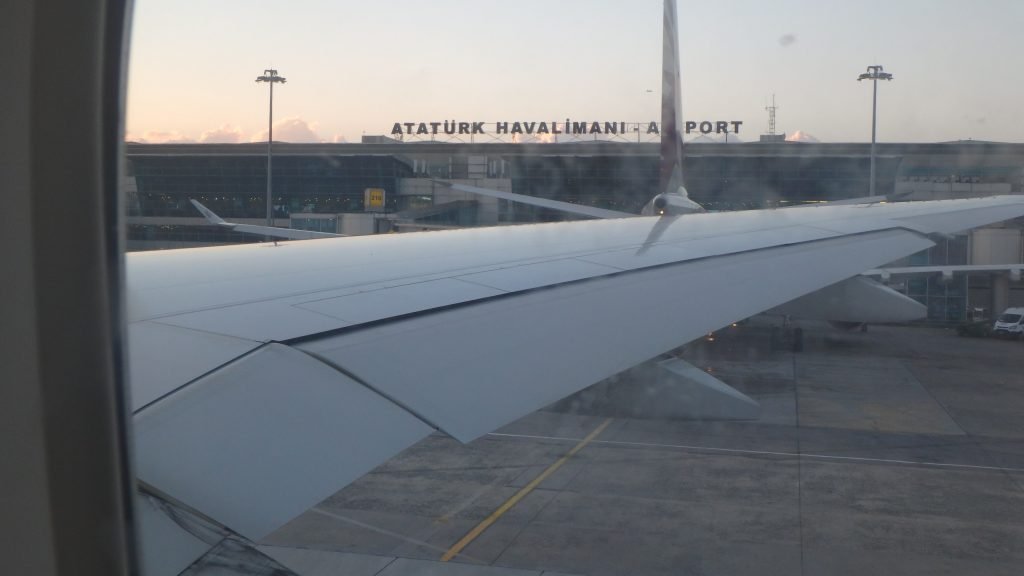
The weeks before departure were filled with endless questions. Would I get lost? Would I be able to navigate a country where I didn’t speak the language? Would I survive travelling on my own to my first European country? And most importantly, would I make my 40-minute transit in Istanbul?
Looking back, that transit worried me more than the entire trip itself. It’s funny how much energy I spent worrying about something that turned out completely fine.Three weeks later, I returned to Malaysia with thousands of photos, unforgettable memories, and a serious case of post-travel depression because I wasn’t ready to leave Greece behind.
If you’re planning a trip to Greece, this guide covers everything I learned before, during, and after my trip.
Instead of focusing on specific destinations, this post is about planning your Greece adventure: budgeting, flights, ferries, accommodation, food, transportation, and mistakes to avoid.
✅ Why I Chose Greece & How I Planned My Itinerary
Let’s start with the obvious question.
Why Greece?
The answer is simple… the islands.
Greece has more than 6,000 islands and islets, which sounds exciting until you actually start planning an itinerary. My original wish list included Santorini, Zakynthos, Mykonos, Milos, Naxos and several others. The more research I did, the more confused I became.
One thing I quickly learned is that Greece should be planned according to geography, not Instagram. Many first-time visitors choose islands based on beautiful photos, only to discover they’re located in completely different parts of the country.
Zakynthos was one of the islands I really wanted to visit. Many friends recommended it, especially after its popularity exploded following Descendants of the Sun. But after looking at the map, I realised it would require additional transportation, extra ferry costs, and valuable travel time.
Eventually, I narrowed my itinerary down to Athens, Santorini, and Milos. Looking back, it was one of the smartest decisions I made.
My 3-Week Greece Itinerary
📍 Athens
History, culture, and my base for exploring the mainland.
📍 Santorini
Famous sunsets, whitewashed villages, and stunning caldera views.
📍 Milos
Beautiful beaches, quieter atmosphere, and one of my favourite islands in Greece.
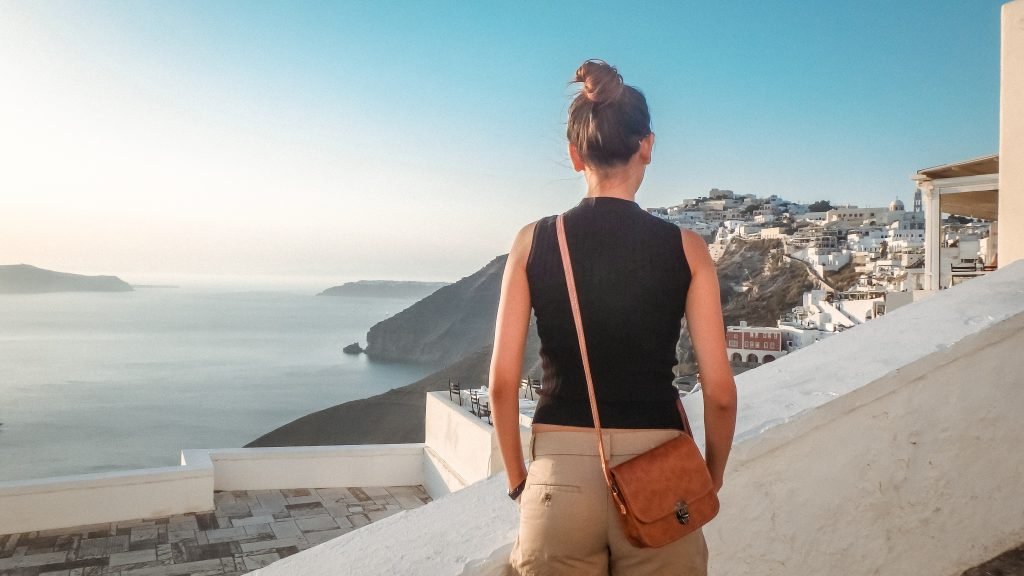

✅ Having a Local Host Changed Everything
Although I travelled solo from Malaysia, I wasn’t entirely alone. I was fortunate enough to have a local host in Greece who helped make the entire experience much easier. Having someone familiar with the country gave me confidence, especially during my first few days.
A fellow traveller once told me: 
“One of the best ways to save money while travelling is to visit places where you already know someone.”
At the time, it sounded like simple advice. Today, I completely agree. Having local friends isn’t just about saving money on accommodation.
It’s about understanding local culture, getting honest recommendations, avoiding tourist traps, and having someone you can contact if things go wrong.
One of the best investments you can make as a traveller isn’t a flight ticket.
It’s friendships.
✅ Budget Breakdown: How Much I Spent in Greece
Whenever I mention Greece, people usually assume it’s expensive. The reality is a little more complicated.
Greece can be surprisingly affordable, but the moment you start island hopping, costs begin adding up quickly. Every ferry ticket, hotel booking, and island transfer slowly increases your overall budget.
For my three-week trip, I spent approximately RM8,000 in total. This included:
- International flights (Turkish Airlines – RM2,793.05)
- Domestic flights
- Ferries
- Speed boats
- Accommodation (Athens – Stayed with my host, Kykladonisia Hotel – €74 per night, Christina Rooms – €42 per night)
- Insurance (RM150.00 – AXA Travel Insurance)
- Food
- Public transportation
- Souvenirs
- Taxi rides
Basically, if money left my wallet during the trip, it’s included in that figure. When I finally returned to Malaysia, let’s just say Maggi became my best friend for a while. 😂

1. How much cash did I bring?
Besides having funds available on my card, I also brought €650 in cash.
For me, that amount was comfortable for day-to-day expenses throughout the trip. Of course, everyone’s spending habits are different. If you enjoy shopping, dining out frequently, or booking activities on the go, you may want to budget a little more.
Greece uses the Euro (€), and during my trip, €1 was roughly equivalent to RM5. One mistake I made early on was constantly converting prices back to Ringgit in my head because I wasn’t yet familiar with the currency; it was easy to get confused when paying for things. In fact, I almost got overcharged at one point simply because I wasn’t paying enough attention. Thankfully, my friend noticed and helped me sort it out.
Lesson learned: get comfortable with the currency before you travel. It will save you a lot of confusion and help you manage your budget more confidently.
2. What Type of Traveller Am I?
I think this part is important because travel budgets mean very little without context. Some people travel with luxury in mind. Others travel with a backpack and survive on the absolute minimum.
As for me? I would describe myself as an independent budget traveller.
Not a backpacker. Not a luxury traveller. Somewhere comfortably in between.
I stayed in reasonably comfortable accommodation, used public transportation whenever possible, occasionally took taxis when needed, and tried to balance comfort with cost. If you’re a backpacker willing to stay in hostels, cook your own meals, and travel more slowly, you could definitely spend less than I did.

3. Is Greece Expensive?
After spending three weeks travelling around the country, my answer is:
Not as expensive as many people think.
The biggest expenses aren’t actually food or public transportation. The real budget killers are:
- Ferries.
- Accommodation.
- Island hopping.
Every time you move from one island to another, your costs start adding up.
- A new ferry ticket.
- A new hotel.
- More transportation.
- More meals on the move.
Before you know it, your budget has grown much faster than expected.
If I had stayed in fewer places, I could have reduced my overall costs quite significantly. But honestly, exploring different islands was one of the highlights of the trip, so I have no regrets.

✅ Getting Around Greece: Flights, Ferries, Buses & Island Transport
One of the questions I get asked most often is:
“Is it easy to travel around Greece?”
Thankfully, yes.
In fact, I found Greece much easier to navigate than I originally expected. Before my trip, I imagined island hopping would be complicated. Different islands, different ferry schedules, multiple transport options, and a language I couldn’t speak.
Thankfully, it turned out to be much more straightforward.
During my three weeks in Greece, I travelled between Athens, Santorini, and Milos using a combination of public buses, metro trains, ferries, speed boats, and domestic flights. Here’s exactly how I did it:
1) Transportation in Athens
Athens has one of the easiest public transportation systems I’ve used. For most travellers, there is absolutely no need to rent a car while staying in the city. Throughout my time in Athens, I relied entirely on:
- Metro (Subway)
- Public buses
The metro system is clean, reliable, and connects many major attractions, while buses cover areas that aren’t directly served by train lines. You can purchase tickets:
- Through the TFA Tickets mobile app
- At metro station ticket counters
Ticket Price: €1.40
What I really liked about the system is that you don’t need to purchase another ticket when switching transportation types. For example:
What I really liked about the system was its flexibility. A single ticket could be used across buses, metro trains, trams, and trains within the 90-minute validity period. That meant I could switch between different forms of transportation without buying another ticket.

2) Travelling from Athens to Santorini
Once I finished exploring Athens, it was finally time to head to the destination I had been dreaming about for years: Santorini. There are two ways to reach Santorini from Athens.
- Option 1: Fly. Faster and more convenient but more expensive
- Option 2: Ferry. Slower, more affordable and more scenic
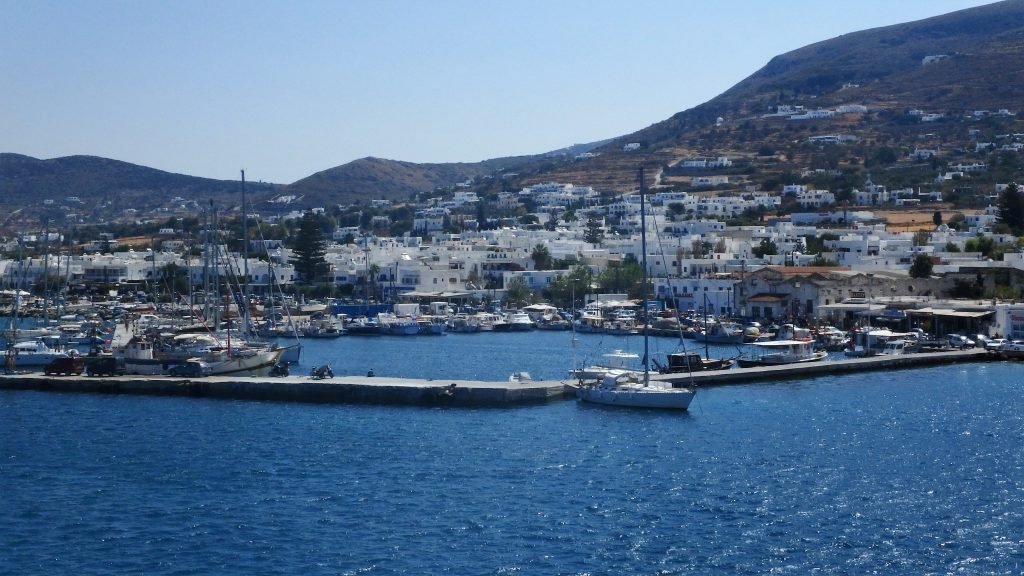
Before visiting Greece, I thought ferries were simply transportation. I was wrong. One of my favourite parts of the journey was watching the ferry stop at islands like Naxos, Ios, and Paros. Even though I wasn’t visiting them on this trip, seeing them from the deck made me add them straight to my future Greece bucket list.
The ferry itself was surprisingly comfortable, with restaurants, cafés, shops, clean toilets, outdoor viewing decks, and plenty of seating. Honestly, it felt more like a mini cruise than public transportation. I highly recommend taking the ferry at least once, even if flights are available.
If you’re planning your own island-hopping adventure, these websites are useful for checking routes, schedules, and ticket prices.
🔹 Go-ferry.com
🔹 Ferries.gr
🔹 Greeka.com
I highly recommend comparing multiple websites before booking because schedules and availability can vary depending on the season.
Ferry Information
- Blue Star Delos: 32 Euros
- Website: Blue Star Ferries
⏳ Approximately 7 hours
Seven hours may sound long, but between eating, relaxing, taking photos, and admiring the scenery, the journey passed quicker than I expected.
💡Tips: Choose the ferry if it’s your first time in Greece, you enjoy scenic journeys, and you’re not rushing. Choose the flight if you’re short on time, you have limited vacation days and convenience is your priority.
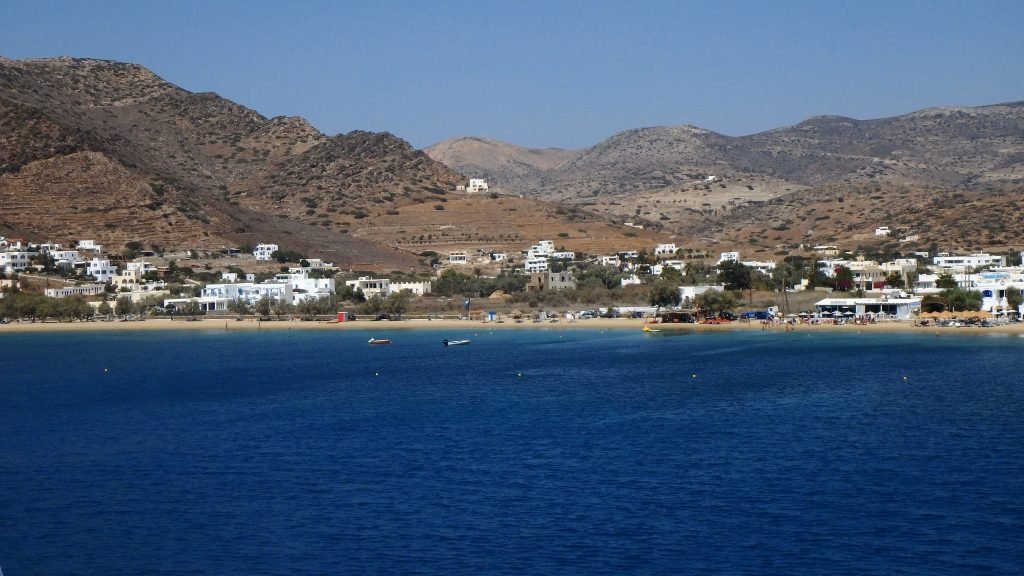


Getting Around Santorini
One thing that surprised me about Santorini was how good the public bus network was. Before arriving, I assumed I would need to rent an ATV or a car. In reality, I didn’t rent anything. For my entire stay, I used public buses. And honestly? That was enough.
The buses were frequent, reliable, and covered most of the major tourist areas on the island. Even the buses were equipped with CCTV systems, which made me feel quite comfortable travelling alone.
Do You Need To Rent A Vehicle?
- Solo Travellers or Couples: Public buses are usually sufficient.
- Families or Larger Groups: Renting a car may be more convenient
- Adventurous Travellers: ATV rentals are popular across Santorini
Personally, I was happy saving the money and relying on buses.

3) Travelling from Santorini to Milos
After Santorini, I continued my journey to Milos. At the time, only two speedboat services operated between the islands, so I strongly recommend booking tickets in advance, especially during peak season.
Speed Boat Information
- Seajets: €52.90
- Website: Seajets
⏳ Approximately 3 hours
The journey was much faster than the ferry from Athens, making it an efficient way to continue island hopping.
Transportation in Milos
Unlike Santorini, public transportation in Milos is more limited. While buses do exist, they don’t reach every attraction on the island. And trust me, some of Milos’ most beautiful locations are not places you’ll want to miss. If I had to give one transportation recommendation for Milos, it would be: Rent an ATV.
An ATV gives you the freedom to explore beaches, viewpoints, and remote areas that public buses simply don’t cover. If you’re only relying on buses, you’ll probably miss some of the island’s best spots.
4) Returning to Athens
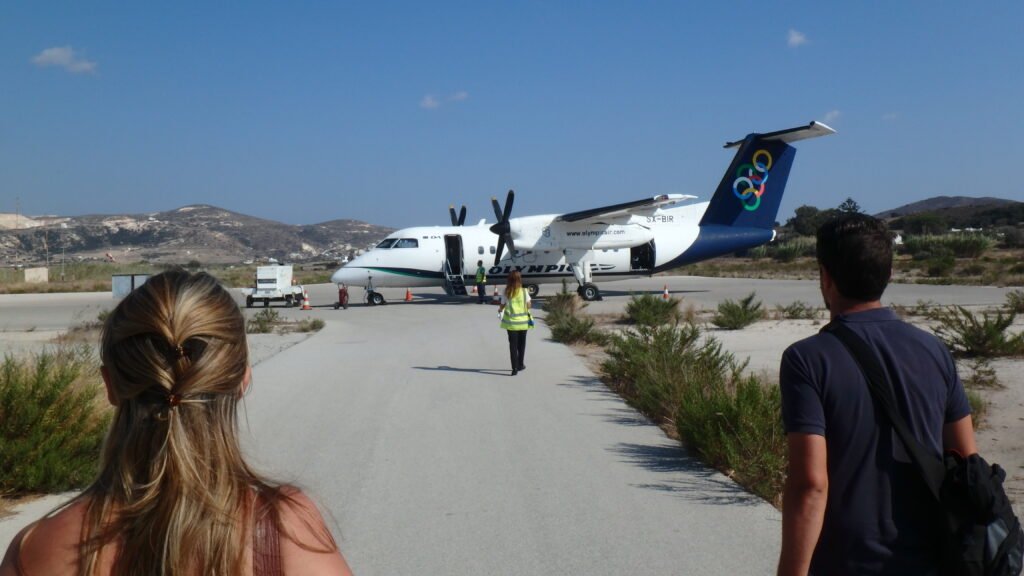
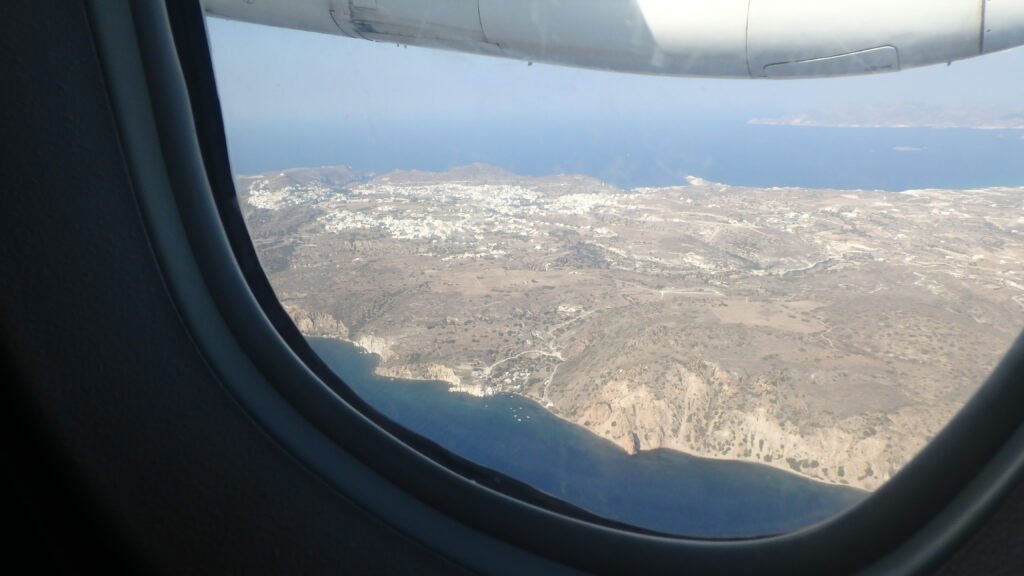
When it was time to return to Athens, I faced another decision. Flight or speedboat? Interestingly, both options were priced very similarly. Since the cost difference wasn’t significant, I chose the option that saved the most time. Flight.
- Olympic Air: €61.30
- Website: Olympic Air
- Flight Duration: 45 minutes
Compared to several hours on a ferry, flying was the clear winner for this route.
Sometimes paying a little extra is worth it when it saves an entire day of travel.
✅ Tips for Muslim Travellers
Finding halal food was probably one of the biggest challenges during my trip. Many restaurants serve pork, and halal options aren’t always easy to find.
Things that helped me:
- Bringing snacks from Malaysia
- Buying groceries from supermarkets
- Cooking whenever possible
- Choosing seafood dishes
- Reading menus carefully before ordering
- Learning a few food-related Greek words
During my trip, I ended up eating more salad than I probably had in the entire year before. By the time I returned home, I felt like a salad expert. Restaurants served bread and bottled water as well before the meal. It felt like a standard part of dining culture in many places I visited. Small details like this made eating out feel very different from Malaysia.
One thing you absolutely must try in Greece is crepe. Trust me on this one.


✅ Renting a Car in Greece
If you’re planning to explore beyond major cities or want complete flexibility, renting a car is another option worth considering. One website I found useful was:
It allows you to compare rental prices from multiple providers and often helps you find better deals.
Things you should know before renting:
- International Driving Permit (IDP) is required
- Always choose full insurance coverage
- Read the rental terms carefully
- Check fuel policies before collecting the vehicle
- Inspect the car thoroughly before driving away
- If you’re comfortable driving overseas, renting a car can open up parts of Greece that most tourists never see.
✅ If I Could Plan This Trip Again
After three weeks in Greece, here’s what I would do differently:
- Spend less time researching famous places and more time researching lesser-known islands.
- Pack slightly lighter.
- Book some ferry tickets earlier.
- Stay longer in Milos.
- Worry less and trust myself more.
Because the truth is, most travel fears disappear the moment you arrive.
Greece was my first solo trip to Europe. It taught me how to navigate unfamiliar places, trust my instincts, and become comfortable being alone. More importantly, it showed me that travelling solo doesn’t mean being lonely. Sometimes it means meeting incredible people, discovering unexpected places, and creating memories that stay with you long after the trip ends.
And honestly? If someone asked me whether Greece is worth visiting, my answer would be immediate: Absolutely.
Things Nobody Told Me About Greece
- The Sun Is Stronger Than You.
I think I came from Malaysia; I understood heat. Then Greece humbled me. The summer sun feels different. Bring sunscreen. Drink water constantly. Don’t underestimate it. - Distances Look Deceptively Close.
When looking at maps, some places appear walkable. Then you discover hills. Lots of hills. Always check elevation, not just distance. - Cash Is Still Useful
Cards are widely accepted, but having cash made smaller purchases easier. Especially in local markets and smaller businesses. - Stay Longer in One Place
One of the easiest ways to reduce costs is simply moving around less. Every transfer between islands costs money. Every new hotel booking adds up. If you’re travelling on a tighter budget, choose fewer destinations and spend more time enjoying each one. Sometimes slower travel is actually better travel. - Don’t Spend Your Entire Holiday in Santorini.
Santorini isn’t the only beautiful island in Greece. Not even close. In fact, some of my favourite memories came from islands that receive far less attention. Many travellers spend most of their budget in Santorini and then don’t have enough time or money to explore anywhere else. Personally, I think three days in Santorini is enough for most travellers. After that, go discover another island. Greece is full of hidden gems waiting to be explored. - Plan Your Island Hopping Budget Early.
This is probably the biggest lesson I learned. When planning a Greece trip, don’t just calculate flights and hotels. Instead, calculate: flights, hotels, ferry tickets, speedboats, local transportation, food, entrance fees and emergency expenses. Island hopping is amazing, but costs can add up very quickly if you don’t budget properly. The earlier you plan, the easier it becomes to avoid unpleasant surprises later.

✅ Would I Do It Again?
Without hesitation, absolutely.
Despite the costs, the planning, the long ferry rides, and the occasional travel stress, Greece remains one of my favourite trips to date. Every Euro spent was worth it.
And if you’re currently planning your own Greece adventure, I hope this guide helps make the journey a little easier.
Trust me.
The moment you see those islands for the first time, you’ll understand exactly why so many people fall in love with Greece.
👉 Continue here:
Athens, Greece: Where to Stay, What to Pack and Things to Know Before You Go
Santorini, Greece: Everything I Loved And What You Should Know Before You Go
Milos Island, Greece: A Quick Travel Guide For A First-Timer
Love, Hani. 🌸


Salam Hani, cuaca Greece bulan Disember sejuk kn? You tau tk suhu brape?
Hye 🙂 W’salam..suhu around 10. but depends. not always the same.
Insyaallah, tahun depan your turn pulak.. 😉 Santorini cantik, sekali seumur hidup kena pi tengok.. btw, thank you! 🙂
dah lama mengidam nak p santorini. tapi asyik busy ke. But nice blog. Insyallah maybe tahun depan 🙂